 Request Consultation




Introduction
We worked with Sergius Ltd., an international unmanned systems company preparing to establish operations in Canada and enter the Canadian defence and dual-use markets.
The company offered unmanned ground and aerial systems intended for missions where conventional access was dangerous, expensive, slow, or operationally limited. Potential applications included defence logistics, public safety, casualty evacuation, emergency response, remote transportation, industrial inspection, and operations in Arctic, coastal, and infrastructure-limited environments.
The client had relevant technology and international experience but required a structured Canadian market entry foundation. This included building a procurement strategy aligned with Canadian government acquisition processes and defence-sector requirements, confirming commercial demand, procurement priorities, and operational use cases across defence and dual-use markets.
We began with the following activities:
► Corporate establishment: We supported the incorporation of a Canadian entity and the establishment of its initial legal, tax, financial, and regulatory structure.
► Market intelligence: We developed a comprehensive market intelligence baseline covering target sectors, competitors, procurement pathways, funding programs, regulatory requirements, industry organizations, strategic events, and potential commercial partners.
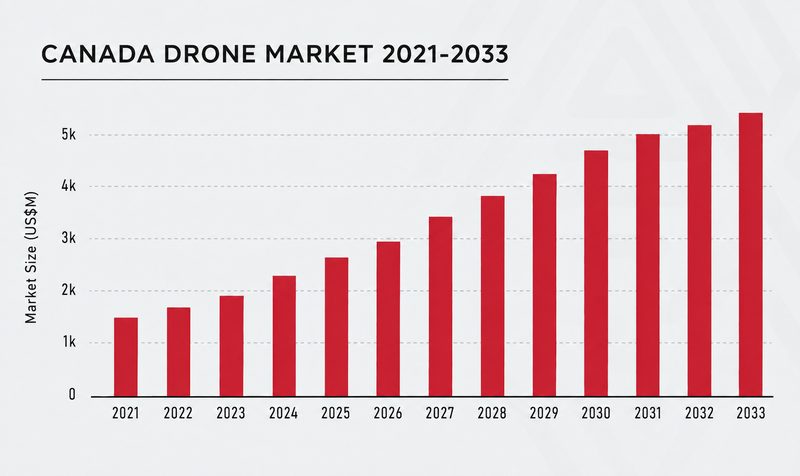
► Stakeholder validation: We engaged senior representatives from government, industry, research, defence, and public affairs to validate strategic priorities, strengthen market intelligence, and establish high-value relationships supporting future business development.
► Strategic development: We created a market-entry strategy, qualified opportunity pipeline, brand identity, website structure, and 36-month business plan supported by a financial model.
The engagement combined corporate establishment, procurement intelligence, stakeholder engagement, business planning, and commercial development to create the operational foundation for long-term growth in Canada.
Challenges
Although the company possessed proven unmanned systems technology and international experience, successful expansion into Canada required a localized market-entry strategy, strategic partnerships, regulatory alignment, and a commercial framework tailored to the Canadian defence ecosystem.
The following challenges and desired improvements were identified:
Complex procurement environment:
► Impact: Canadian defence procurement involves multiple departments, programs, regulatory obligations, security considerations, and lengthy qualification processes. Entering without verified procurement intelligence would create a high risk of wasted effort and poorly targeted proposals. The evolving procurement landscape also required continuous monitoring of policy, funding programs, and government priorities to maintain an accurate market-entry strategy.
► Desired state: A documented understanding of procurement routes, buyer requirements, government engagement obligations, and realistic opportunities.
Broad portfolio and undefined Canadian positioning:
► Impact: The company’s technology could serve multiple sectors, but pursuing every possible application would dilute its message and business-development resources.
► Desired state: A focused Canadian position built around specific operational problems, priority sectors, and use cases where the company could demonstrate a credible advantage.
Limited Canadian stakeholder network:
► Impact: Without established relationships, the company could not easily validate buyer requirements, identify suitable partners, or obtain informed feedback on its procurement strategy.
► Desired state: An active network across government, defence, industry, research, procurement, and government relations.
Incomplete commercial infrastructure:
► Impact: The absence of an integrated business plan, financial model, brand identity, and website structure limited the company’s ability to communicate its offer consistently and make informed expansion decisions.
► Desired state: A coherent commercial foundation connecting strategy, positioning, operations, marketing, and financial planning.
Time-sensitive opportunities:
► Impact: Relevant innovation and procurement opportunities often have short application periods. Without an established review and response process, the company risked missing viable entry points.
► Desired state: An opportunity pipeline supported by defined evaluation criteria, stakeholder intelligence, and the capacity to prepare targeted applications.
Solution
We developed an integrated Canadian market-entry program connecting market intelligence, stakeholder engagement, operational preparation, branding, business planning, and opportunity development. The program was designed as a living framework that could evolve alongside changing procurement policies, funding opportunities, stakeholder priorities, and defence sector developments.
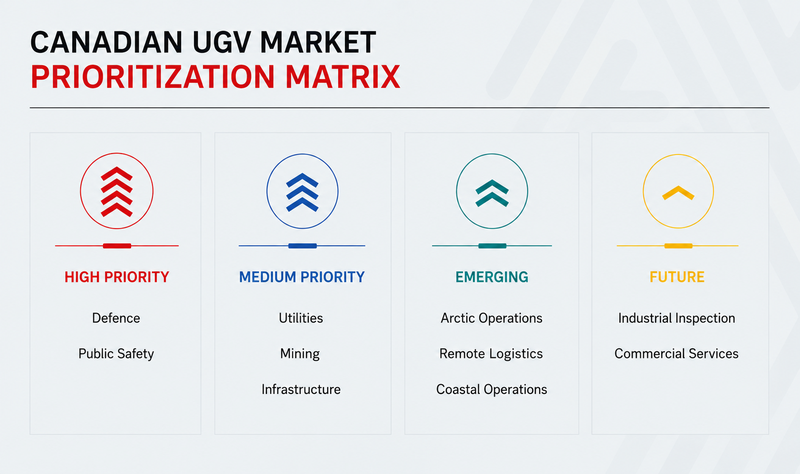
The research identified defence and public safety as the strongest initial markets because of their operational requirements for logistics, reconnaissance, casualty evacuation, hazardous-response support, and access to difficult terrain. Parallel opportunities were identified in Arctic and coastal operations, remote logistics, industrial inspection, mining, utilities, and emergency services.
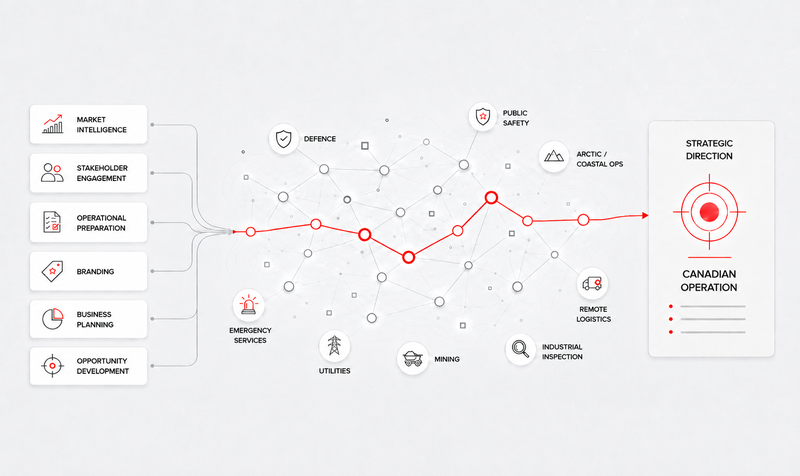
The company was positioned as a provider of mission-configured and Canadian-adapted unmanned systems rather than a general equipment reseller. The strategy emphasized operational deployment, environmental resilience, training, compliance preparation, and lifecycle support.
This approach allowed corporate, strategic, marketing, and financial activities to support one defined market-entry direction.
Implementation
Stage 1 – Launch and Intelligence
The first stage focused on establishing the Canadian operating foundation and developing an evidence-based understanding of the defence, procurement, and dual-use markets.
Step 1. An incorporated Canadian entity was established with its initial legal, tax, and financial structure.
Step 2. CRA accounts and the core regulatory compliance framework were established.
Step 3. We prepared a market-entry and procurement brief covering:
► priority sectors, including defence, remote services, and infrastructure;
► Canadian competitors and comparable systems;
► relevant regulatory and compliance considerations;
► federal and industry funding programs;
► defence, technology, and procurement events;
► relevant government, industry, and partner organizations;
► Canadian government procurement structures and processes.
Step 4. We developed a consolidated stakeholder and opportunity map covering government, defence, industry, research, technology, and potential commercial partners.
Step 5. Initial engagement with priority stakeholders provided strategic market intelligence, strengthened industry relationships, and refined procurement and commercialization priorities before active business development began.
Step 6. Additional operational infrastructure was established beyond the original scope, including collaboration and project-management systems, banking and administrative preparation, evaluation of office solutions, communications infrastructure, and organizational tools required to support the Canadian operation.
Stage 2 – Market Entry
The second stage translated the research into a focused strategy and active business development process.
Step 1. We completed a Strategic Plan defining:
► Canadian market positioning;
► priority sectors and customer groups;
► government and private-sector business-development approaches;
► procurement and partnership priorities;
► the company’s initial Canadian value proposition.
Step 2. We developed a qualified pipeline covering potential RFPs, innovation programs, direct engagements, partnerships, and pilot opportunities.
Each opportunity was organized according to its relevance, stakeholders, priority, current status, next actions, and potential entry route.
Step 3. Stakeholder engagement covered at least 19 senior contacts across:
► government relations and public affairs;
► Canadian defence and infrastructure companies;
► unmanned systems and defence technology providers;
► defence research organizations;
► industry associations;
► public-sector procurement and policy stakeholders;
► senior government and parliamentary representatives.
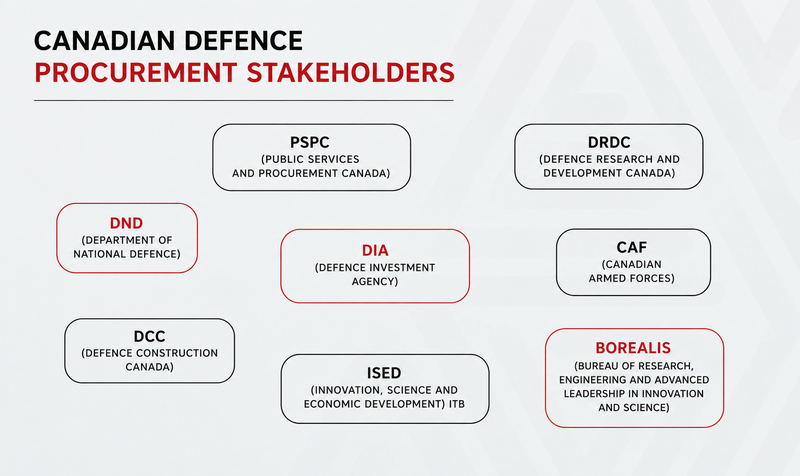
The proposed market-entry strategy was refined and validated through discussions with senior representatives from government, defence, public affairs, industry associations, procurement specialists, and executive leadership responsible for Canadian defence portfolios. These engagements ensured that the strategy reflected current procurement practices, evolving policy, buyer expectations, and emerging market opportunities.
Step 4. A Canadian brand identity and supporting marketing assets were developed, approved, and delivered. The identity was designed to communicate protection, reliability, and operational capability while remaining suitable for both defence and civilian markets.
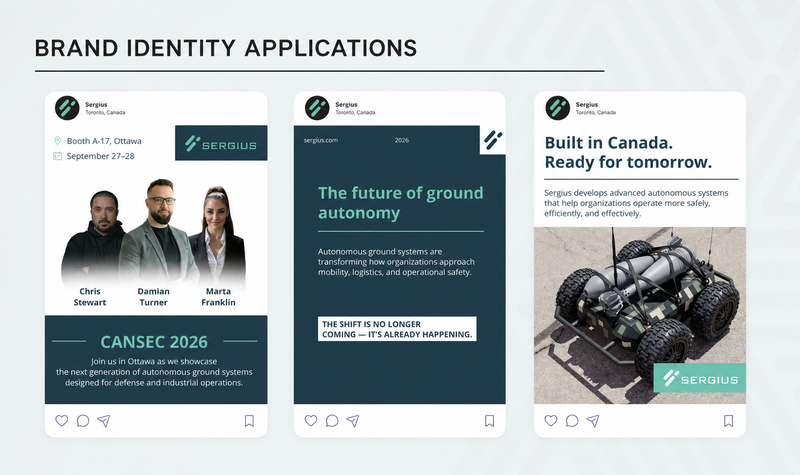
Step 5. A website structure was developed to present the company’s capabilities, technologies, sectors, use cases, and Canadian positioning consistently.
Stage 3 – Business Development
The final stage focused on turning the market-entry foundation into a long-term commercial roadmap.
Step 1. The opportunity pipeline was advanced through continued research, stakeholder follow-ups, and direct engagement.
Step 2. Potential routes for bids, partnerships, pilot projects, innovation programs, and direct commercial engagements were defined.
Step 3. We delivered a 36-month Business Plan covering:
► business and revenue model;
► target markets and customer segments;
► competitive landscape;
► positioning and marketing strategy;
► intellectual-property protection;
► implementation roadmap;
► personnel and operational requirements;
► market-entry and financing requirements.
The Business Plan was developed as a living strategic document intended to evolve alongside the Canadian operation and changing market conditions.
Step 4. A financial model was developed with:
► first-year and three-year sales forecasts;
► profit-and-loss projections;
► cash-flow projections;
► personnel expenses;
► marketing expenses;
► initial financing requirements;
► product and service revenue assumptions.
The model connected commercial targets with staffing, operational spending, professional services, and controlled inventory purchasing.
Step 5. A go-forward strategy was prepared for:
► federal government procurement;
► private-sector opportunities;
► Canadian partnerships;
► pilot projects and demonstrations;
► future market expansion.
Step 6. A proposal was submitted for an unmanned aerial vehicle (UAV) designed for operations in complex coastal and Arctic environments.
Results
All 13 planned deliverables were completed within the three-month engagement.
► Canadian entity established: The client completed the initial legal, financial, tax, and compliance foundation required to operate in Canada.
► Operational setup advanced: A Teams-based project management environment was configured, office options were assessed, a flexible provider was selected, and six business phone systems were evaluated.
► Strategic market intelligence delivered: The client received a decision-ready assessment of Canadian market opportunities, procurement pathways, funding programs, regulatory considerations, competitive positioning, and priority stakeholders to support informed market-entry decisions.
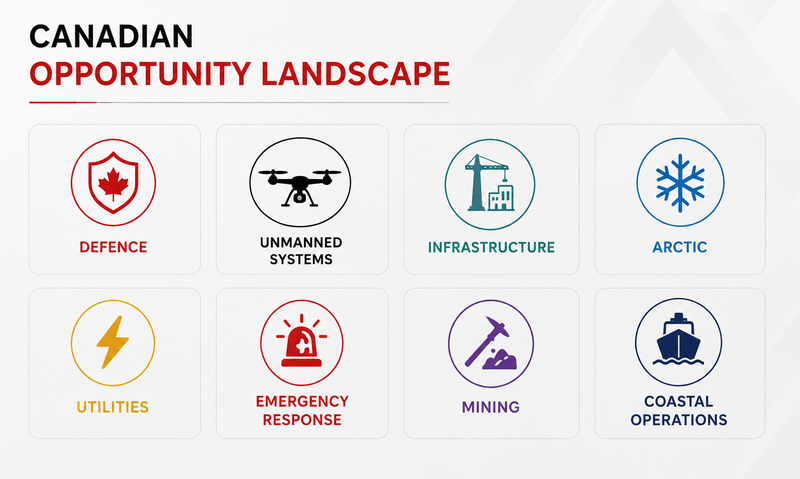
► Strategic direction defined: A Strategic Plan established the company’s Canadian positioning, target markets, government engagement approach, private-sector strategy, and business-development priorities.
► Stakeholder network developed: Senior relationships were established across government, defence, procurement, research, public affairs, and industry, creating direct pathways to key decision-makers and supporting future Canadian market entry.
► Opportunity pipeline created: Procurement, funding, partnership, pilot, and direct-engagement opportunities were identified and organized with priorities and next actions.
► Execution framework established: Project management systems, stakeholder engagement processes, opportunity tracking, and operational tools were implemented to support continued Canadian market development beyond the initial engagement.
► Brand and website foundation completed: The brand identity and marketing assets were approved and delivered. The website structure was developed but not launched in the first phase.
► Business and financial planning completed: A 36-month Business Plan and financial model were delivered, providing a framework for market entry, operations, marketing, staffing, financing, and expansion.
► Specialized UAV proposal submitted: A proposal was submitted for an unmanned aerial vehicle designed for complex coastal and Arctic operations.
The first phase established the operational, commercial, and strategic foundation required for Canadian expansion. Beyond creating a market-entry strategy, the engagement developed the organizational infrastructure, stakeholder relationships, procurement intelligence, opportunity pipeline, and execution framework needed to support long-term business development within Canada's evolving defence and dual-use sectors.